Shift 1 · Walk the floor

Every hazard seen.
Every action closed.
Every person
home safe.

EHS Nation is the safety, health and environmental platform that frontline crews actually use. This plant has six things that could seriously hurt someone. Tap one to see the rule behind it and what EHS Nation does about it.

1 of 6 found

Warning01/06

Struck-by

The forklift at the dock

Trucks and people share the same aisles. A truck with a weak brake or a dead horn is a danger to everyone in them, so OSHA wants each one examined before it's used every day.

29 CFR 1910.178(q)(7)

What EHS Nation does

The pre-use checklist is on the driver's phone and works with no signal. A failed item becomes a corrective action with an owner and a due date, so the brake actually gets fixed.

See Inspections

Warning02/06

Fall from height

The mezzanine edge

In general industry, a walking surface with an unprotected edge 4 feet or more above the level below needs fall protection, such as a guardrail.

29 CFR 1910.28(b)(1)

What EHS Nation does

A job hazard analysis the crew is briefed on and signs, permits to work with their precautions, and the guardrail on an inspection that's scheduled and tracked until it's done.

See Risk & permits

Danger03/06

Hazardous energy

Hydraulic press 4

Switching a machine off doesn't make it safe. Stored pressure, springs and a raised ram can still move it, so servicing needs a written lockout procedure for the machine.

29 CFR 1910.147

What EHS Nation does

A procedure for this press with every isolation point color-coded and photographed, approved before use, inspected periodically, and a QR tag on the machine that opens it.

See Lockout (LOTO)

Danger04/06

Confined space

The process water tank

The air inside can be fine one minute and deadly the next, and many of the people who die in confined spaces went in to rescue someone else. Entry needs a permit, testing and an attendant.

29 CFR 1910.146

What EHS Nation does

A confined space permit with its precautions and gas tests, and crew sign-on that only works for people whose required training is current.

See Risk & permits

Warning05/06

Chemicals

The flammables cabinet

Everyone who works with a chemical needs a label they understand, and the safety data sheet has to be within reach during every shift.

29 CFR 1910.1200(g)(8)

What EHS Nation does

New chemicals are requested and approved before they arrive, GHS labels print from the record, and the SDS opens from any phone in the area.

See Chemicals & SDS

Warning06/06

Falling objects

The top of rack 4

Stored material has to be stable and secure against sliding or collapse. A bent beam or an overhung pallet usually gives warning long before something falls.

29 CFR 1910.176(b)

What EHS Nation does

A near miss reported from the QR poster in under a minute, an investigation that finds the cause, and a check 90 days after the fix that it still holds.

See Incidents & OSHA

Built around the rules and frameworks you answer to

  • OSHA 29 CFR 1904
  • OSHA ITA electronic submission
  • 29 CFR 1910 general industry
  • GHS · HazCom 2012
  • EPCRA Tier II
  • RCRA generator manifests
  • EPA GHG Emission Factors Hub
  • EPA eGRID
  • GHG Protocol Scope 1 & 2
  • GRI · ESRS reporting
  • ISO 45001-aligned
  • SCORM 1.2 & 2004
  • WCAG 2.2 AA

One near miss, followed

Every serious injury starts as something someone noticed.

Here's what happens to one near miss inside EHS Nation, from the first tap on a phone to the fix that holds. The case is an example. The screens are the real product, with demo data.

  1. 10:41 a.m.

    A pallet slips on Line 3. Nobody is hurt.

    The top pallet on rack 4 slides when a forklift backs out and lands where someone was standing a minute earlier. On paper, this is the near miss that never gets written down.

    Near miss

    Where
    Line 3, rack 4
    What
    top pallet slid off the beam
    Hurt
    nobody. this time.
  2. 10:42

    Maria scans the poster on the rack and reports it.

    The QR poster for the area fills in where it happened. She picks near miss, takes a photo of the bent beam and sends it, in English or Spanish, with or without a signal.
    Reporting from a QR poster on a phone, with the area already filled in
  3. 10:43

    The report reaches the people who can act on it.

    Rules you set notify the area supervisor and the safety lead, and the report starts down a workflow you drew: reported, investigating, actions, review, closed. Every step has a time limit.
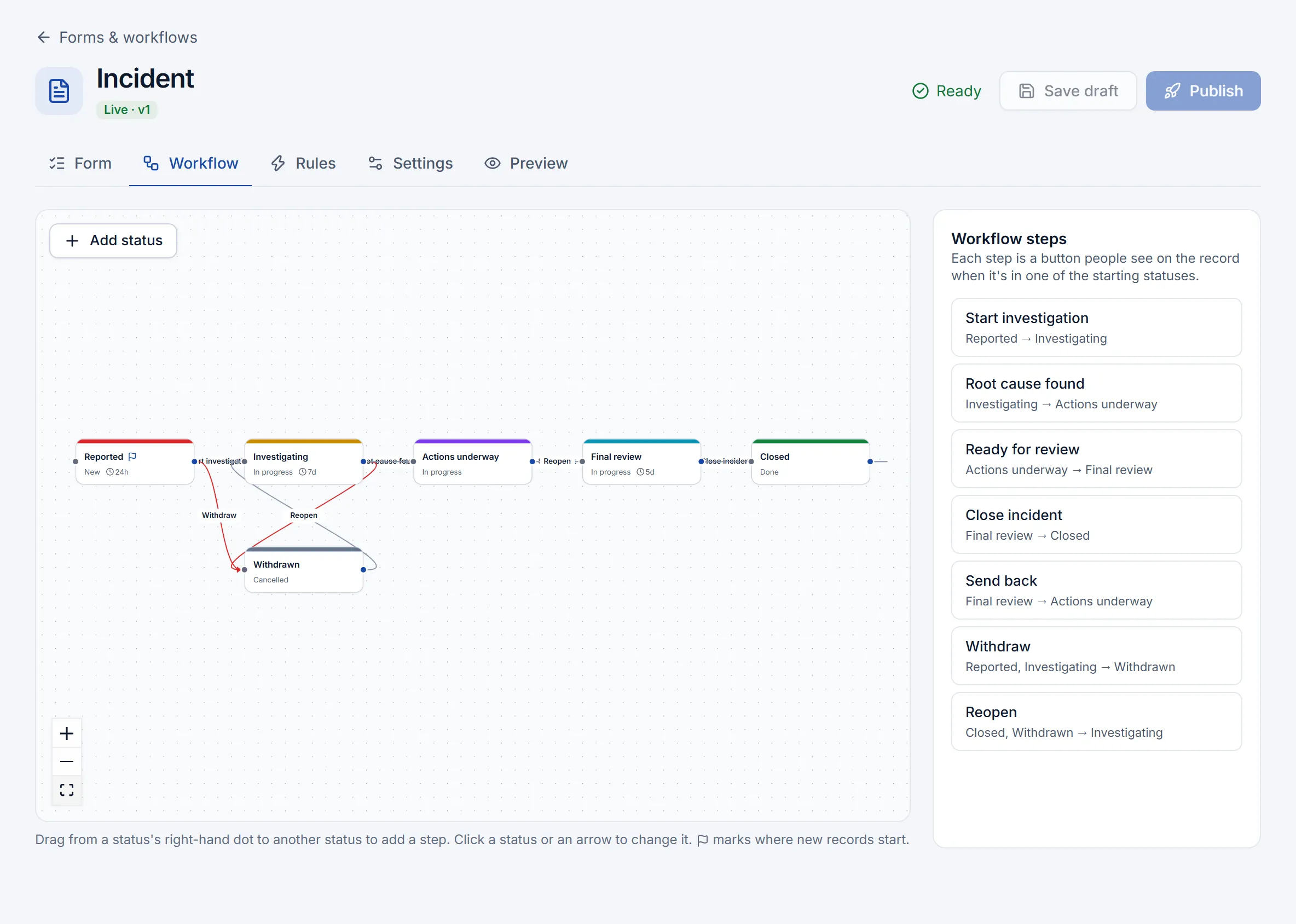
    The workflow designer with statuses from Reported to Closed and the steps between them
  4. Day 3

    The crew finds the cause, not someone to blame.

    One workspace holds the team, a timeline, witness statements, the 5 Whys and a fishbone. The root causes get starred, and the report can be printed for the safety committee.
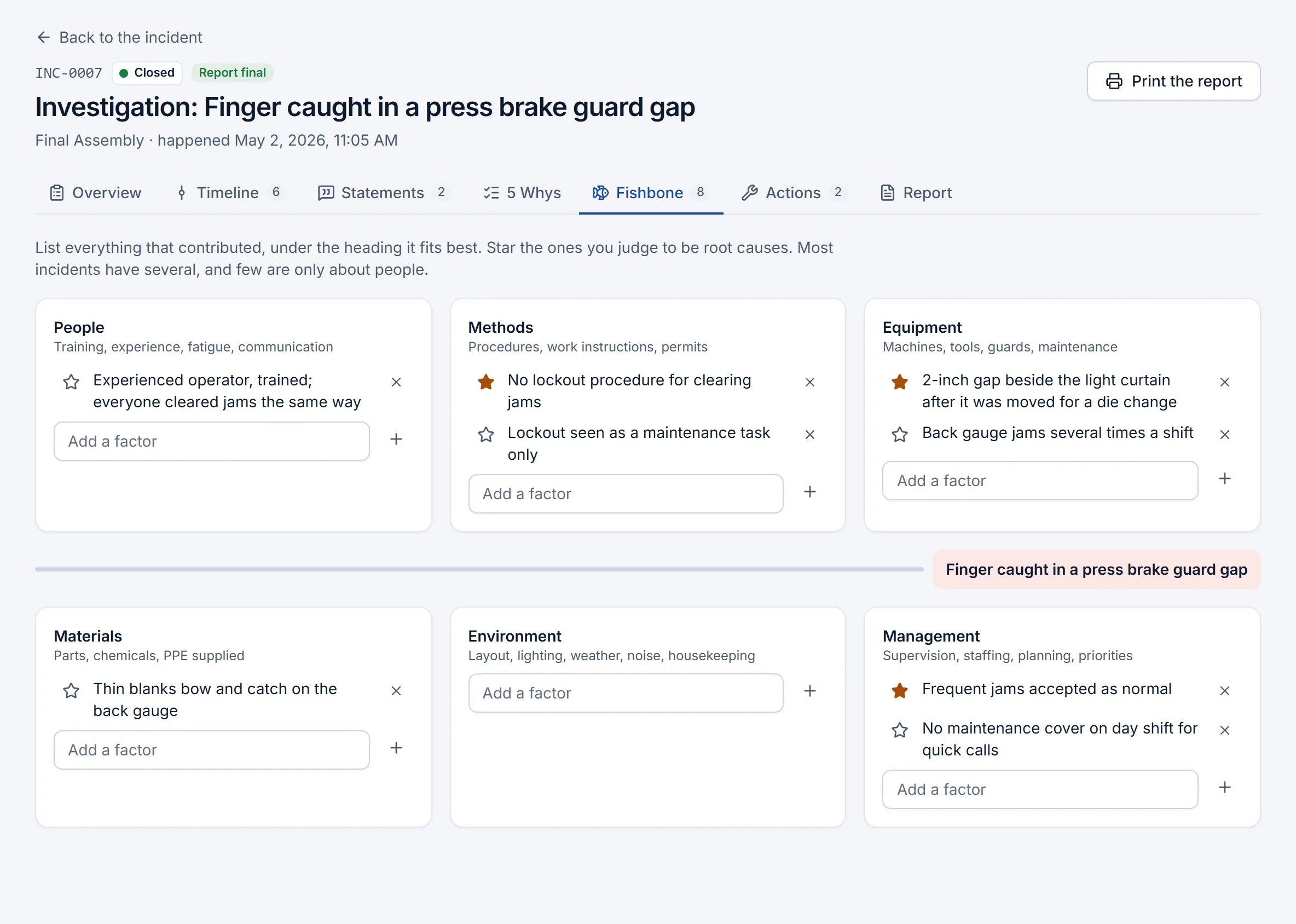
    The investigation workspace with a fishbone of contributing factors and root causes starred
  5. Day 14

    The fix gets an owner and a date.

    Replace the beam, add a backstop, change how pallets are put away. Each action has an owner and a due date, owners are reminded when one runs late, and the review waits until every action is closed.
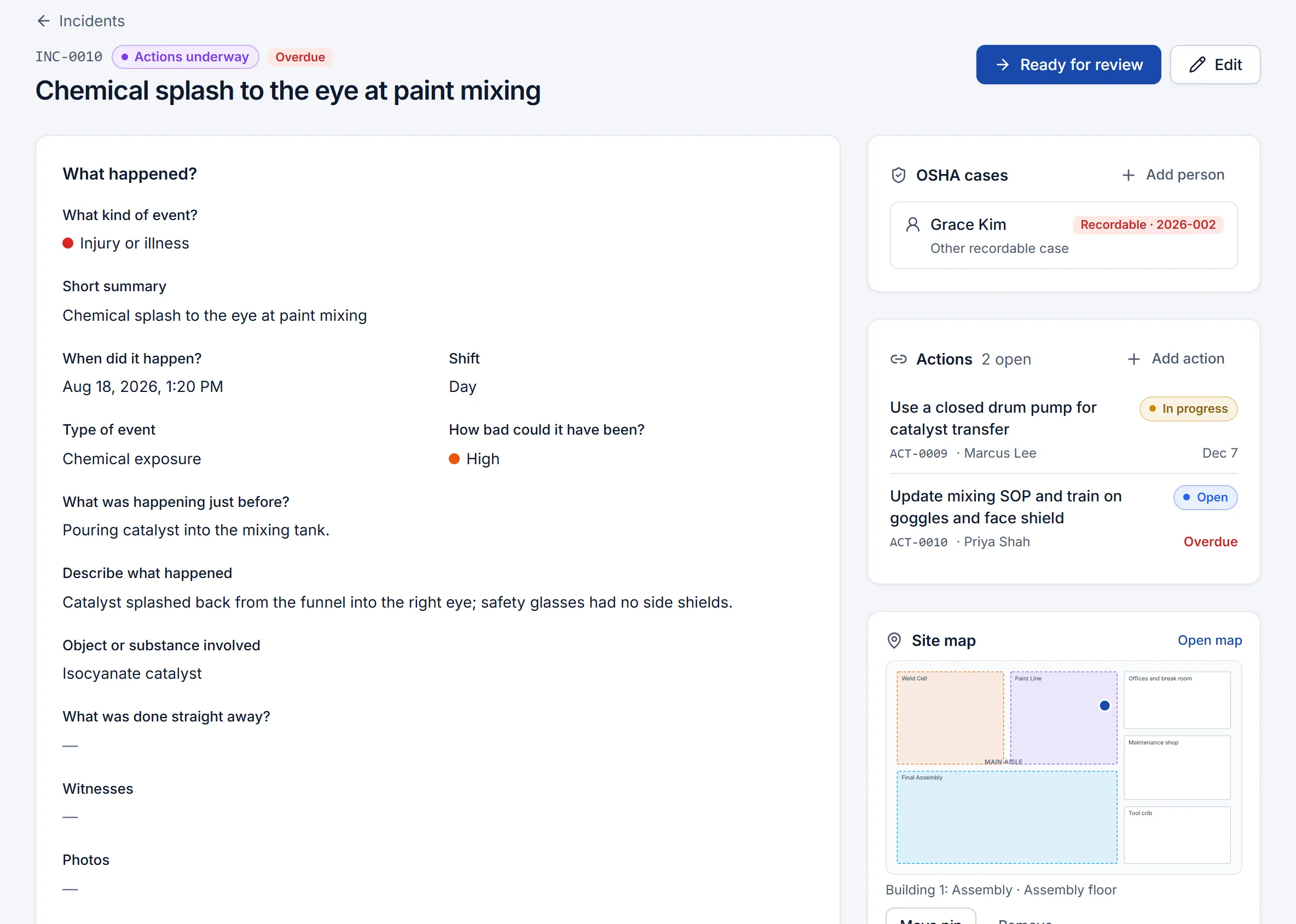
    An incident record with its status, details and linked corrective actions
  6. Day 104

    Ninety days later, someone checks the fix still works.

    Fixes drift. A backstop gets removed, a habit comes back. So 90 days after a fix is verified, someone is asked to look again, and a fix that didn't hold reopens.

  7. Every day after

    And it all adds up to proof.

    Near misses reported, actions closed on time and inspections done are leading indicators on a live dashboard, with industry benchmarks and a risk forecast for each site.
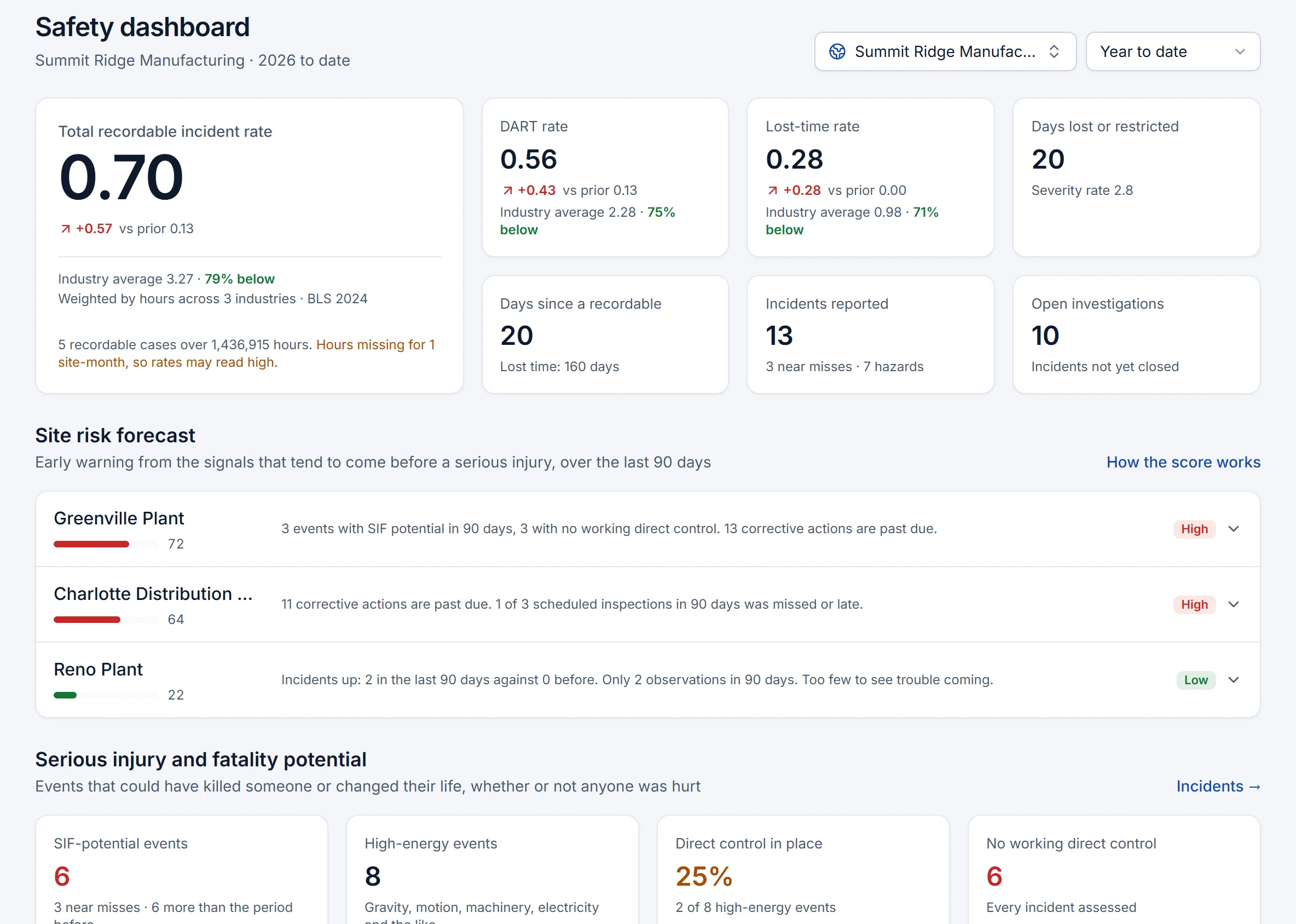
    The safety dashboard with incident rates and leading indicators

Never

The serious injury it could have been.
For the frontline

Built for the people closest to the hazard.

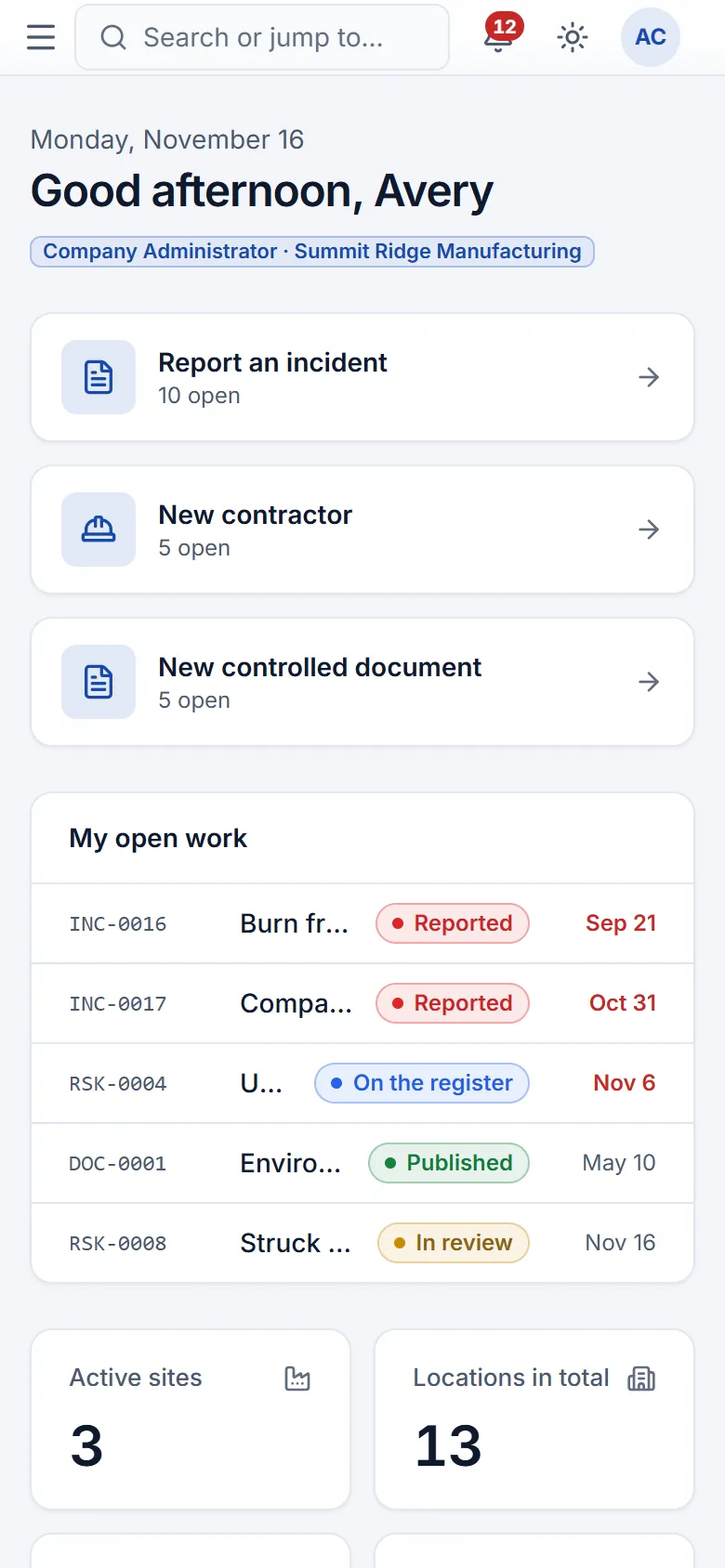
If reporting is hard, people don't report. EHS Nation is designed phone-first for the operator on the line, the driver at the dock and the crew in the field.

  • One scan to reportA QR poster per area fills in the location for them.
  • Works with no signalReports, photos and checklists send when the connection returns.
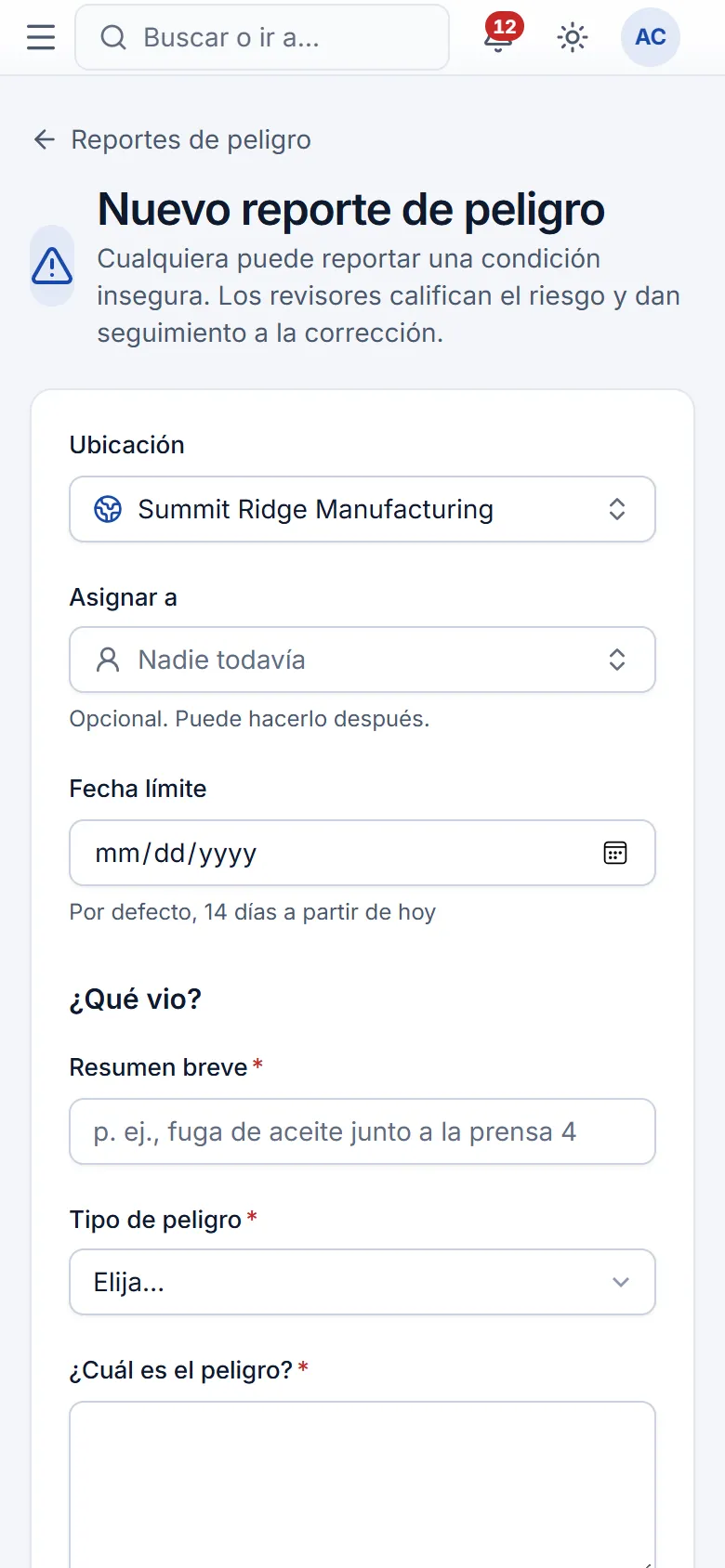
  • English and SpanishEach person picks their language. Your own forms stay as you wrote them.
  • Nothing to installIt runs in the phone's browser and can be added to the home screen.
  • Speak up without a nameOn the forms you choose, hazards and near misses can come in anonymously, with replies both ways.
  • You said, we didShow people what changed because they spoke up, in the app and on a poster.
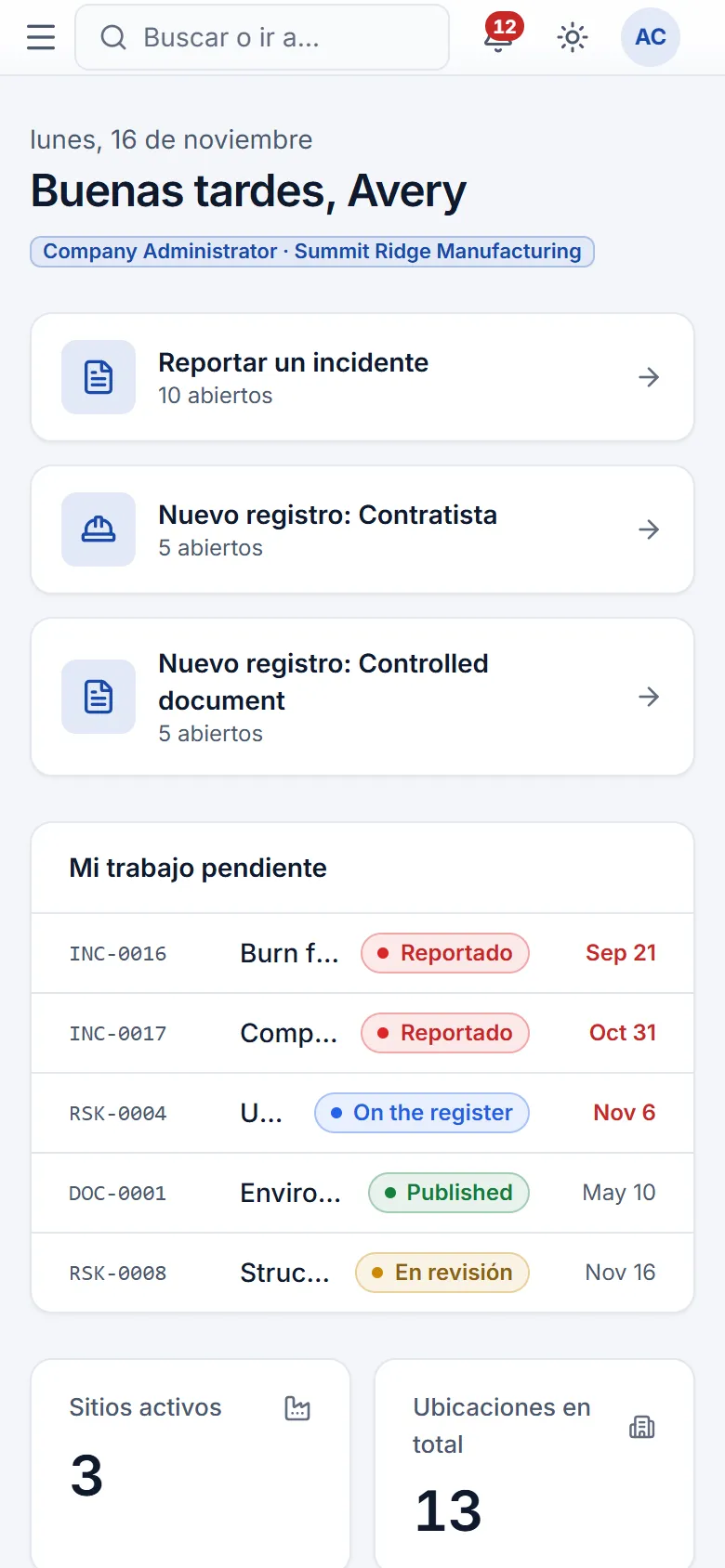
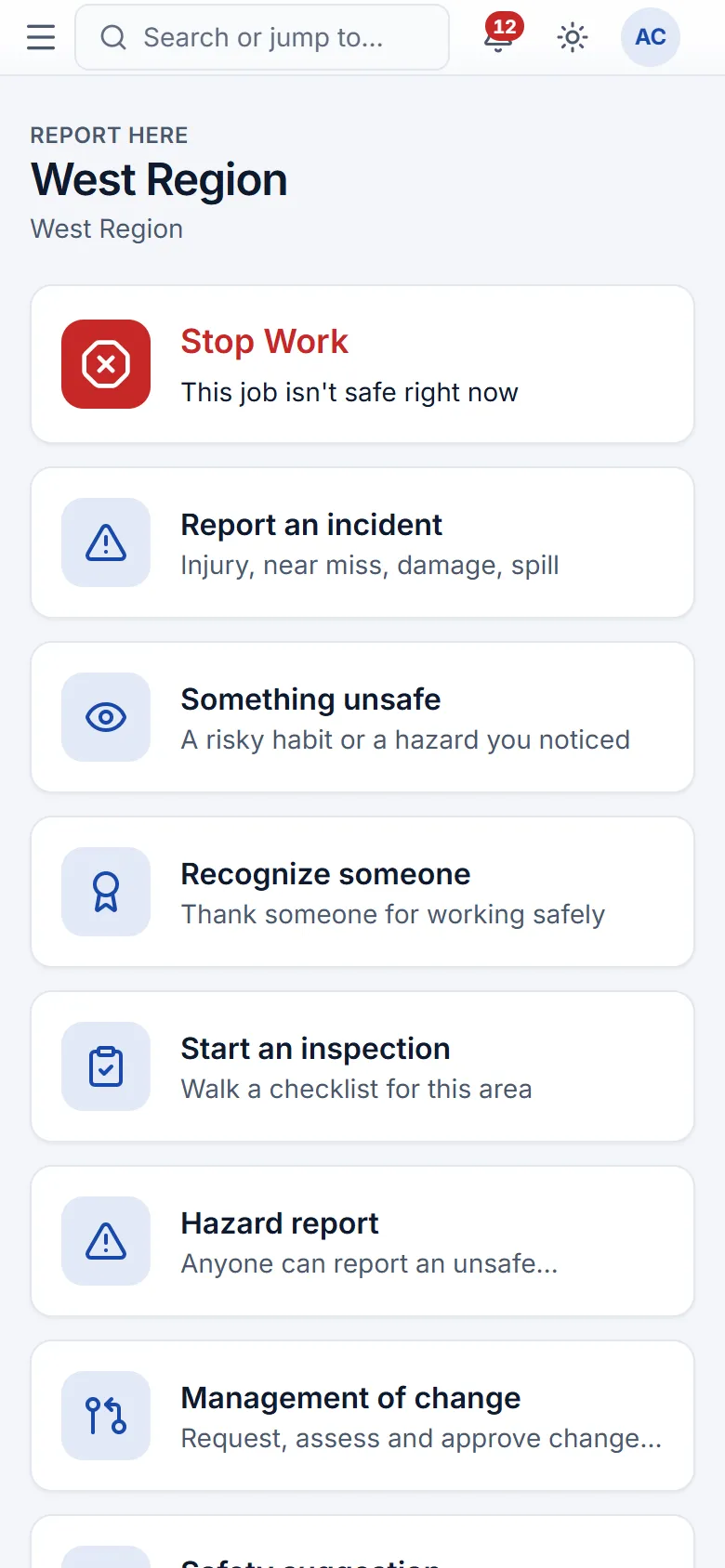
The EHS Nation home screen on a phone in English
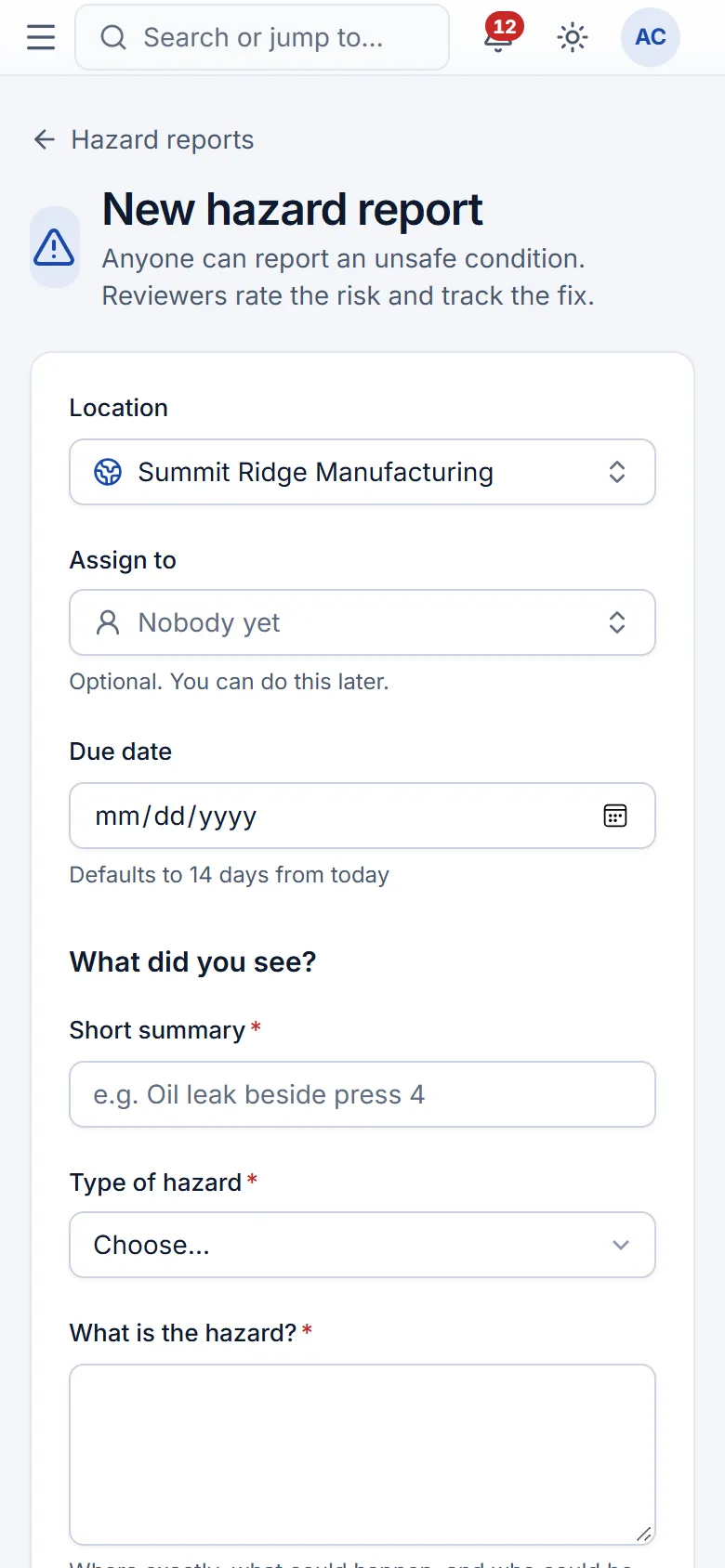
The hazard report form on a phone in English
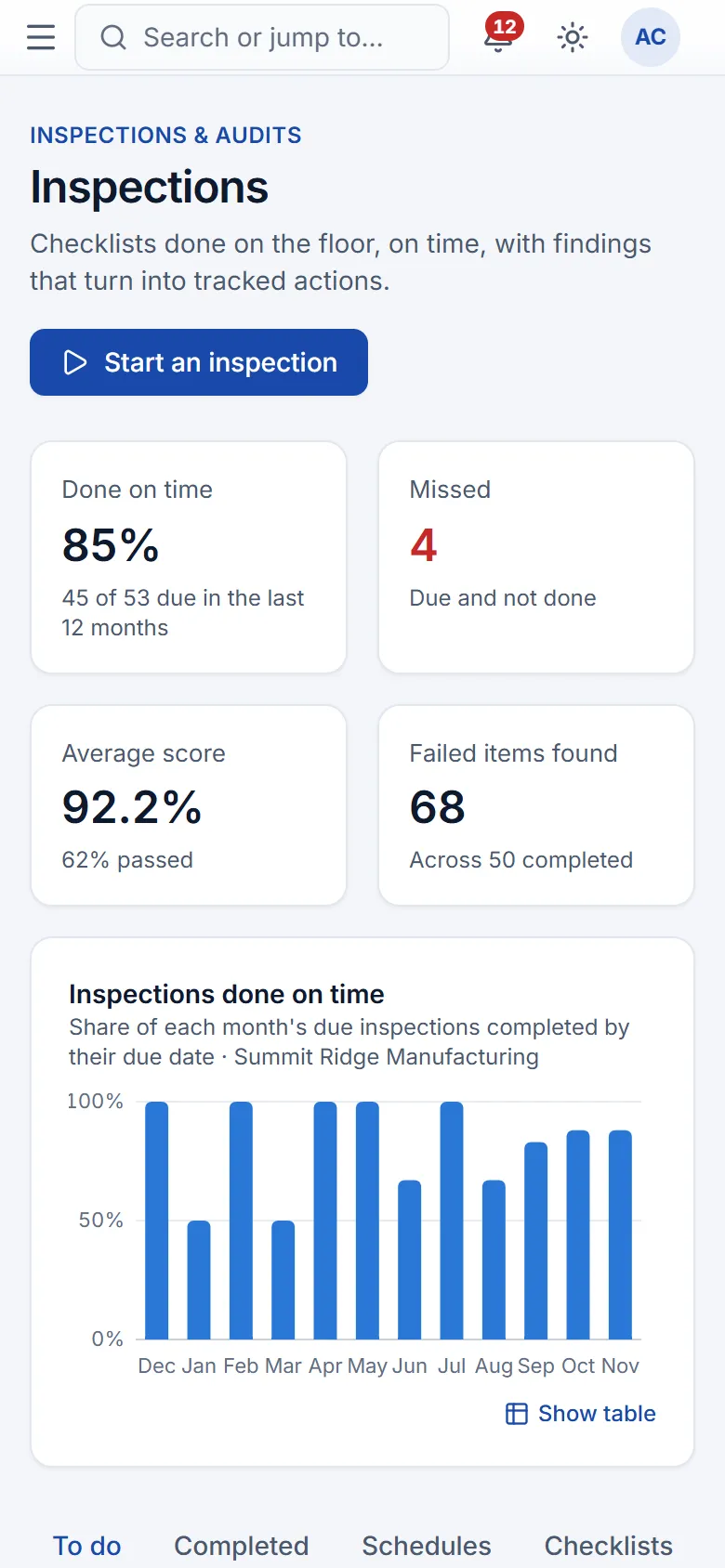
The inspections list on a phone
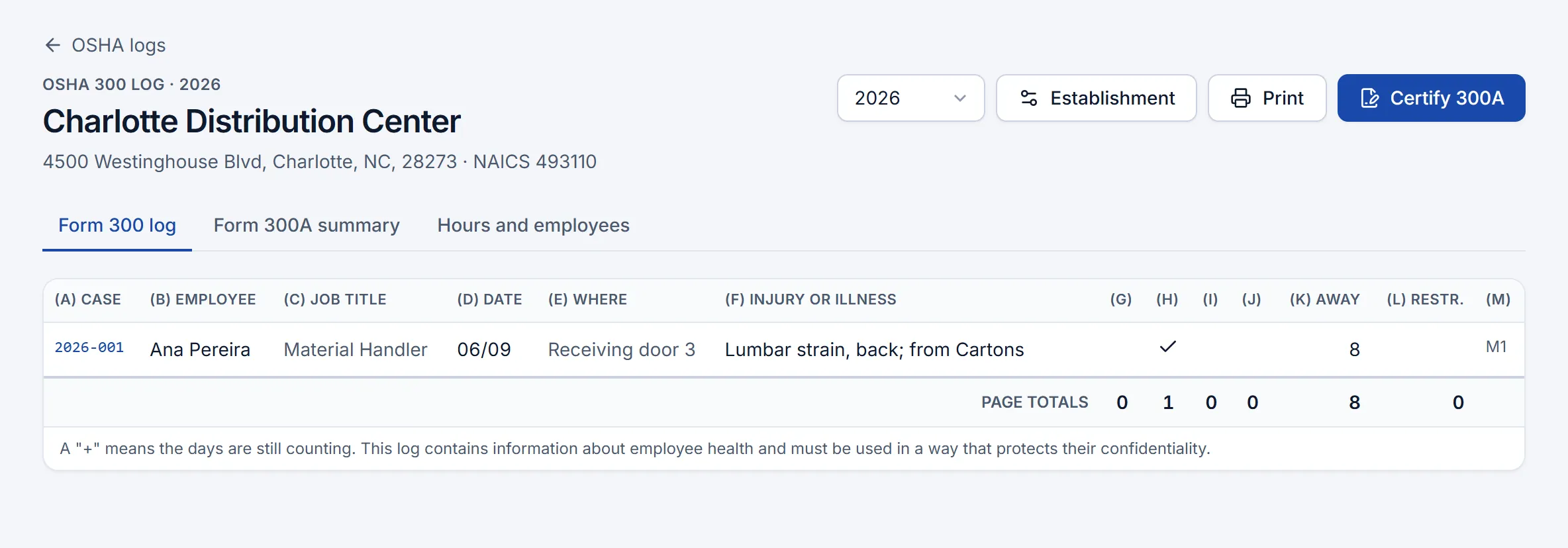
The OSHA Form 300 log generated from recorded cases

OSHA recordkeeping, built in

The log keeps itself.

A recordability wizard walks each case through the rules and shows the paragraph behind every answer. Recordable cases flow straight onto the right establishment's log.

  • Form 300, 300A and 301 per establishment, with privacy cases kept off the log by name
  • Day counts capped at 180, and a 300A ready to certify and post
  • Case and summary files in the layout OSHA's Injury Tracking Application expects
  • Medical details in confidential fields that are never sent to the AI
1904.4–1904.111904.29(b)(7)1904.321904.391904.41
Try the free recordability checker

Configure, don't code

Your forms. Your workflow. Live this afternoon.

Every record type is a form, a workflow and a set of rules that your EHS team controls. No consultants, no change requests, no waiting for the next release.

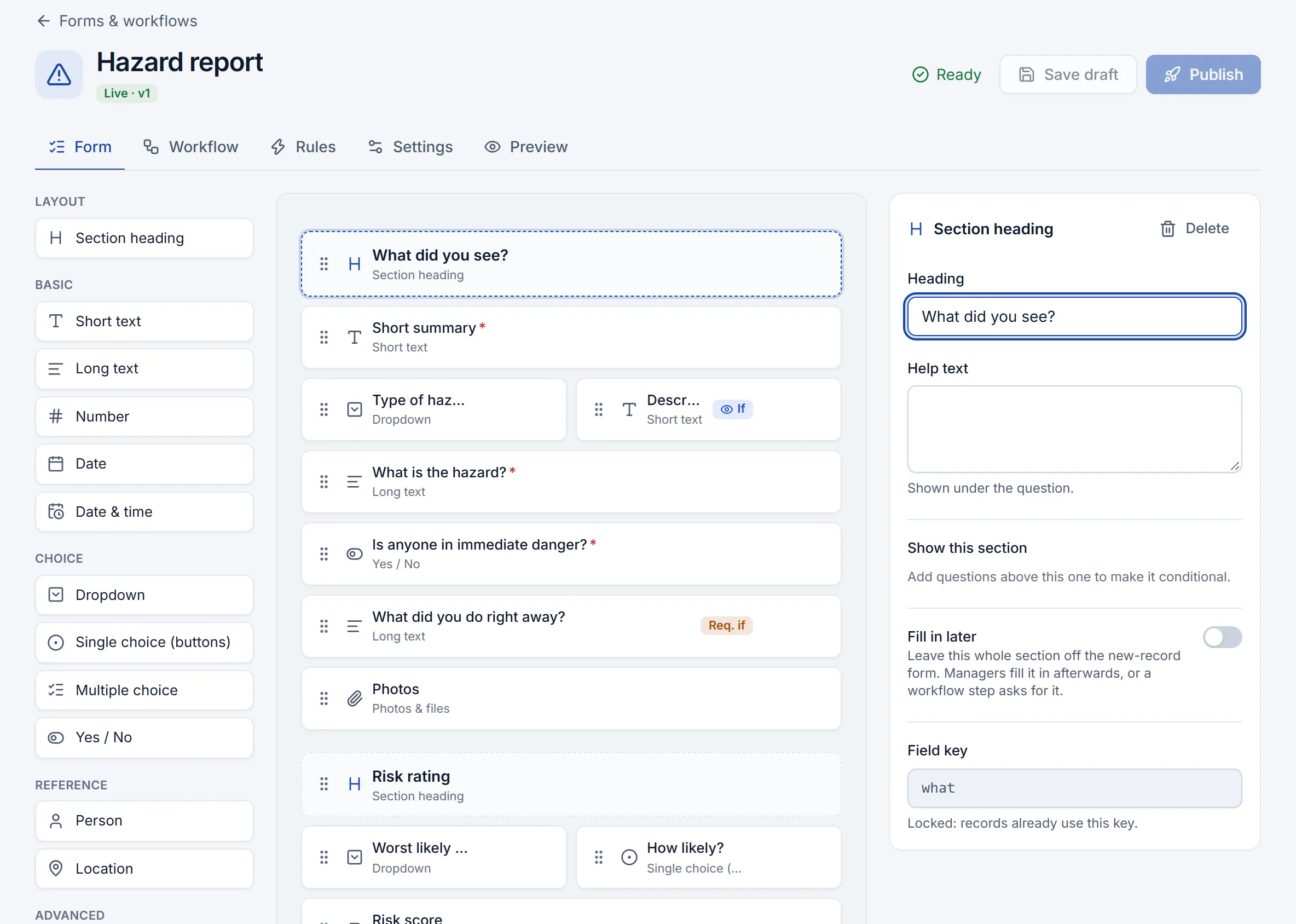
  • Drag-and-drop form builder. Choices, people, locations, signatures, photos and calculated risk scores. Questions show, hide or become required based on earlier answers. With AI on, a photo of a paper form becomes a draft to start from.
  • A visual workflow designer. Draw statuses and the steps between them. Say who may take each step, what it needs and how long it may take.
  • Rules that do the chasing. Notify, assign, fill in answers, set due dates or start a linked follow-up form when a record arrives, moves or runs late.
  • Safe to change. Edits are drafts until published, and open records move to the new version cleanly.
The form builder with a palette of question types and a hazard report form

AI with guardrails

AI that suggests. People who decide.

AI takes on the slow parts of EHS work. It runs on your company's own Anthropic API key, each assistant is off until you switch it on, it never sees confidential answers or injured people's names, and nothing it suggests is saved until a person presses Save.

How AI works here

  1. 01

    It suggests

    Reads an SDS, drafts an investigation's whys, actions and report, spots hazards in a photo, turns a paper form into a draft and answers questions about your data.

  2. 02

    You review

    Suggestions show the words that led to them, for the person who knows the job to accept, change or discard.

  3. 03

    You save

    Only a person saves. Every request is logged and your company sets a daily limit, so you always know what was asked and when.

The AI only receives what a feature needs, from records the person can already open. Confidential answers and the names of injured people and witnesses are never sent.

Security and trust

Your incident data is sensitive. We built like it.

How we protect your data

Isolation, twice

Every query is filtered by company, and Postgres row-level security refuses other companies' rows even if a filter is ever missed.

Append-only audit trail

A database trigger blocks edits and deletes to the audit trail, even from the application itself.

Single sign-on

Sign in with Microsoft Entra ID or Google Workspace, and require it for your whole company if you choose.

Roles scoped to locations

A role given at a region covers the sites beneath it, and nobody can grant permissions they don't hold.

Hardened by default

Strict security headers, CSRF protection, rate limiting and lockout, and uploads checked to be what they claim.

Accessible to everyone

Every main screen is checked against WCAG 2.2 AA in light and dark mode, and works with a keyboard.

Why switch

Less paperwork. More prevention.

The old way

With EHS Nation

The OSHA log rebuilt in a spreadsheet every January
Form 300, 300A and the ITA files built from cases as they happen
Paper checklists typed in later, if at all
Phone checklists that work offline, and failed items that become actions
Corrective actions lost in email threads
Owners, due dates and reminders on every action, tracked to closed
Training records in a binder nobody can search
A matrix by role and site, with reminders before anything expires
An SDS binder by the door
Each SDS a QR scan away, and Tier II from the inventory you hold
A separate tool, login and export for every program
One platform, one sign-in, one audit trail

Next step

See EHS Nation with your own sites and forms.

Book a demo and we'll walk through the platform with your locations, your forms and your questions. No slides, no pressure.

Or send us a question

DangerDo not operate

Locked by
your safety team
Reason
a 30-minute walkthrough
Remove when
you've seen it work
Book a demo